Neurological Excellence.
Providing definitive care for complex brain and spine conditions with advanced clinical protocols and decade-long mastery.
Top Treatments & Procedures Offered
Super-Specialized Clinical Focus
I.V. Thrombolysis (Acute Ischemic Stroke)
Time-critical, evidence-based intravenous thrombolysis therapy for acute ischemic stroke. Designed to rapidly dissolve clots, restore cerebral blood flow, and maximize neurological recovery within the golden hour.
View Stroke ProtocolTherapeutic Botox Injection
Precision-guided Botulinum Toxin (Botox) injections for the management of chronic migraine, cervical dystonia, hemifacial spasm, and post-stroke spasticity. Provides long-lasting, targeted muscle relaxation and pain relief.
Explore Spasticity CareCTS Injection Therapy
Minimally invasive corticosteroid injections for Carpal Tunnel Syndrome (CTS). Delivers rapid, localized relief from median nerve compression, significantly reducing numbness, tingling, and pain in the hand and wrist.
View Neuromuscular CareOccipital Nerve Block
Advanced anesthetic and corticosteroid nerve block procedures targeting the greater and lesser occipital nerves. An effective, fast-acting clinical intervention for occipital neuralgia and chronic, refractory headaches.
Explore Headache ManagementDr. Ranjan Kumar specializes in these advanced super-specialty treatments alongside comprehensive neurological care.
Request Specialized ConsultSpecialized
Neurological Care
Providing definitive care for a wide spectrum of complex conditions including Stroke, Epilepsy, and Neuromuscular disorders.
Precision Diagnosis.
Compassionate Care.
"Every patient is a unique physiological case. My approach combines the rigorous data of neurodiagnostics with the deep empathy required for neurological recovery."
Second Opinion Service
Specialized review for complex cases of Multiple Sclerosis and Autoimmune Encephalitis.
Neuro-Critical Unit
24/7 priority management for acute stroke patients at Chandan Hospital.
Health Education Library
Empowering patients with expert knowledge about neurological health, diagnostics, and preventive care.
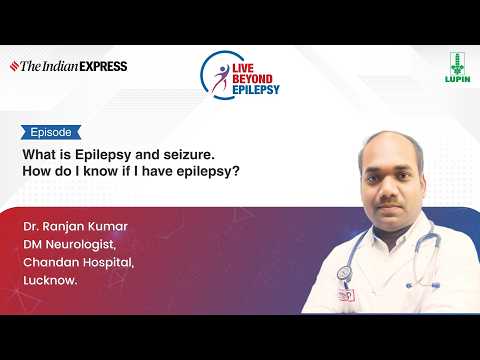
Dr. Ranjan Kumar || Live Beyond Epilepsy || Indian Express
What is Epilepsy and seizure. How do I know if I have epilepsy? || Dr. Ranjan Kumar
Read TranscriptHide Transcript
Hello, I am Dr. Ranjan Kumar. I am a Consultant Neurologist in Lucknow. Today we will talk about seizures and epilepsy, and how we can recognize them. First, what is a seizure? A seizure is a symptom that occurs due to abnormal and excessive electrical activity in our brain. Symptoms can appear in various ways, such as lip smacking, jerking on one side of the body, cramps or stiffness in the hands and legs, or jerking in the entire body. Along with that, eyes rolling up, excessive eye blinking, and sometimes the patient may pass urine or stool involuntarily. Seizures can happen due to many reasons. Out of these, many reasons are correctable, which we can treat. There are also some causes that we cannot cure. Among the treatable causes, the most common ones are: sometimes patients get seizures along with brain fever. Children can get seizures with high-grade fever. And sometimes with a stroke, or clotting or bleeding in the brain, there is a risk of seizures. Along with this, low sodium and low sugar are common reasons due to which a patient gets seizures. By just having a seizure, we do not call any patient an epilepsy patient. The second thing is epilepsy. Epilepsy is a condition in which the patient has a tendency to have recurring seizures. If any person gets seizures two or more times after an interval of 24 hours and we do not find any definite underlying cause for it, then we say that person is an epilepsy patient. So it is very important that we differentiate what a seizure is and what epilepsy is. How will a person recognize that they have this problem? The most important thing in seizures or epilepsy is the patient's symptoms. Symptoms can appear in many ways, for example, if a patient is continuously staring blankly to one side, or lip smacking, feeling abdominal fullness, eye blinking, or abnormal jerky movements in the body. These are all types of seizures. In major seizures, which we call generalized tonic-clonic seizures, the patient has stiffness in all four limbs and they become unconscious. The best way to recognize it is that the patient, their relatives, or whoever witnessed the event clearly explains the symptoms to the doctor in their own words, exactly how the symptom occurred. This makes it very easy for the doctor to recognize what type of epilepsy or seizures the patient has, so that proper treatment can be done. Secondly, we can also take the help of some scans like MRI and CT scans, and there is a test called EEG (Electroencephalogram). It is very helpful for us in making the diagnosis of epilepsy and seeing the response of medicines, to check whether the patient's seizures are under control or not.
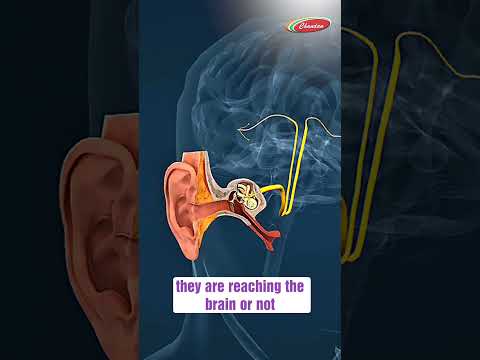
BERA Test Explained by Dr. Ranjan Kumar | Diagnose Hearing & Nerve Problems Early | Chandan Hospital
👂 Trouble hearing or delayed speech? It might be time for a BERA Test (Brainstem Evoked Response Audiometry) — a painless and highly accurate test that helps assess hearing ability and brainstem nerve responses. In this video, Dr. Ranjan Kumar, Senior Neurologist at Chandan Hospital, explains: ✅ What the BERA Test is ✅ How it helps in diagnosing hearing or nerve issues ✅ Why early testing is important for children and adults alike At Chandan Hospital, we provide advanced neuro-diagnostic facilities, expert care, and early intervention to ensure healthy hearing and better neurological outcomes. 📍 Visit Chandan Hospital, Lucknow & Haldwani 📞 Call: 79051 79848 🌐 www.chandanhospital.in
Read TranscriptHide Transcript
Hello. Today we will talk about a test called BERA. BERA stands for Brain Stem Evoked Response Audiometry. It is a hearing test. [Music] In this test, we have to see whether the auditory responses going from the patient's ear to the brainstem (a part of the brain) are going normally or not. [Music] It is a very simple test. In this, we put earphones on the patient and give audio responses, and we record on the computer whether those responses are reaching the brain or not. [Music] It is used in newborn children, some individuals, and elderly people who cannot cooperate in a normal hearing test. [Music] We use it to find out if they have any hearing problem or issue.
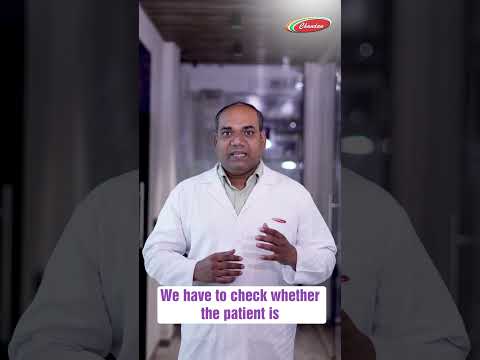
How EEG Test Measures Brain Activity | Expert Neurologist Explains | Chandan Hospital
Ever wondered how your brain activity is measured? 🧠 Our expert Neurologist at Chandan Hospital, Lucknow explains everything you need to know about the EEG (Electroencephalogram) Test — a safe, painless, and effective method to study your brain’s electrical signals. ✅ What You’ll Learn: How an EEG test works What conditions it helps detect (like seizures, epilepsy, and other neurological disorders) Why early diagnosis is crucial for brain health ✨ Stay informed. Stay healthy. 📍 Visit Chandan Hospital, Lucknow for expert Neurology care and advanced brain testing facilities.
Read TranscriptHide Transcript
Today we will talk about a neurological test called EEG. EEG stands for Electroencephalogram. In this test, whatever electrical activity is present in the patient's brain, we record it using electrodes. It is not a painful test for the patient. The patient is asked to lie down comfortably in the lab. Electrodes are placed on their head. And whatever electrical activities occur inside the brain, whether normal or abnormal, we record them on the computer. Mainly, this test is used in epilepsy patients. It is used for the diagnosis of epilepsy, its treatment, and to check whether the patient is responding to the treatment or not. We have to observe all these things. Also, for diseases resembling epilepsy, for example, if a patient is not regaining consciousness, or to see whether the patient is actually having seizures or not, we perform this test. [Music]

Feeling Dizzy? Introducing Chandan Hospital’s Comprehensive Vertigo Lab | Advanced Neuro Care
Feeling dizzy or off balance? Chandan Hospital brings you the newly launched Comprehensive Vertigo Lab, designed to diagnose and treat the root cause of Vertigo, Dizziness, and Balance Disorders. Our Vertigo Lab is equipped with: ✔ Advanced diagnostic technology ✔ Highly experienced Neurologists ✔ Complete assessment & personalized treatment ✔ Balance & dizziness evaluation ✔ Modern equipment for precise analysis Whether your symptoms are due to ear issues, nerve imbalance, or neurological causes — we help you find accurate answers and the right treatment. 📍 Visit Chandan Hospital, Lucknow 📞 0522-666-6666 🌐 www.chandanhospital.in ✨ Chandan Hospital – Committed to Healthcare Excellence
Read TranscriptHide Transcript
At Chandan Hospital, Lucknow, we have launched a Comprehensive Vertigo Lab. In the Vertigo Lab, we conduct all vertigo-related tests such as VNG, video nystagmography, and other related tests. With the help of this, we are able to make an exact and clear diagnosis of the patient—to find out exactly why the patient is feeling dizzy. Whether it is a normal cause related to the ear or a serious cause related to the brain, we perform these tests, make a final diagnosis, and then provide proper treatment to the patient accordingly. There are also some maneuvers through which the patient gets complete relief from vertigo. That facility is also available in our lab.
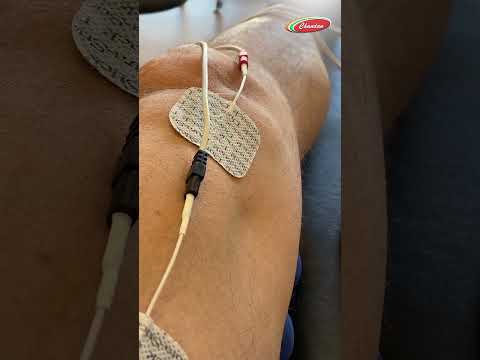
Tingling or Numbness in Hands & Feet? Know Why You Need an NCV Test | Dr. Ranjan Kumar
Feeling tingling, numbness, or weakness in your hands or feet? These could be signs of nerve damage — and early diagnosis is crucial! In this video, Dr. Ranjan Kumar (Vice-Chairperson, Chandan Institute of Neurosciences) explains the NCV Test (Nerve Conduction Velocity Test) — a simple, non-invasive test that helps detect nerve issues before they worsen. 👉 Learn how the NCV Test helps identify conditions like: Peripheral neuropathy Diabetic nerve damage Carpal tunnel syndrome And other neurological disorders 🧠 Visit Chandan Hospital for expert Neuro testing and comprehensive diagnostic care. 📍 Location: Lucknow
Read TranscriptHide Transcript
Hello. Today we will talk about a neurological test which we call NCS or NCV. It means Nerve Conduction Velocity Test or Nerve Conduction Study. In this test, with the help of electrodes, we gather information about whatever movement is happening in the patient's nerves, meaning whether the flow of electrical activity in the patient's nerves is happening normally or not [Music]. This test is not painful at all. The patient's nerves are examined by giving a slight current. In which diseases can we use this? [Music] There are diseases like peripheral neuropathy, carpal tunnel syndrome, ALS. We use this test in them. [Music]