Beyond the Tremor: A Comprehensive Guide to Parkinson's Disease
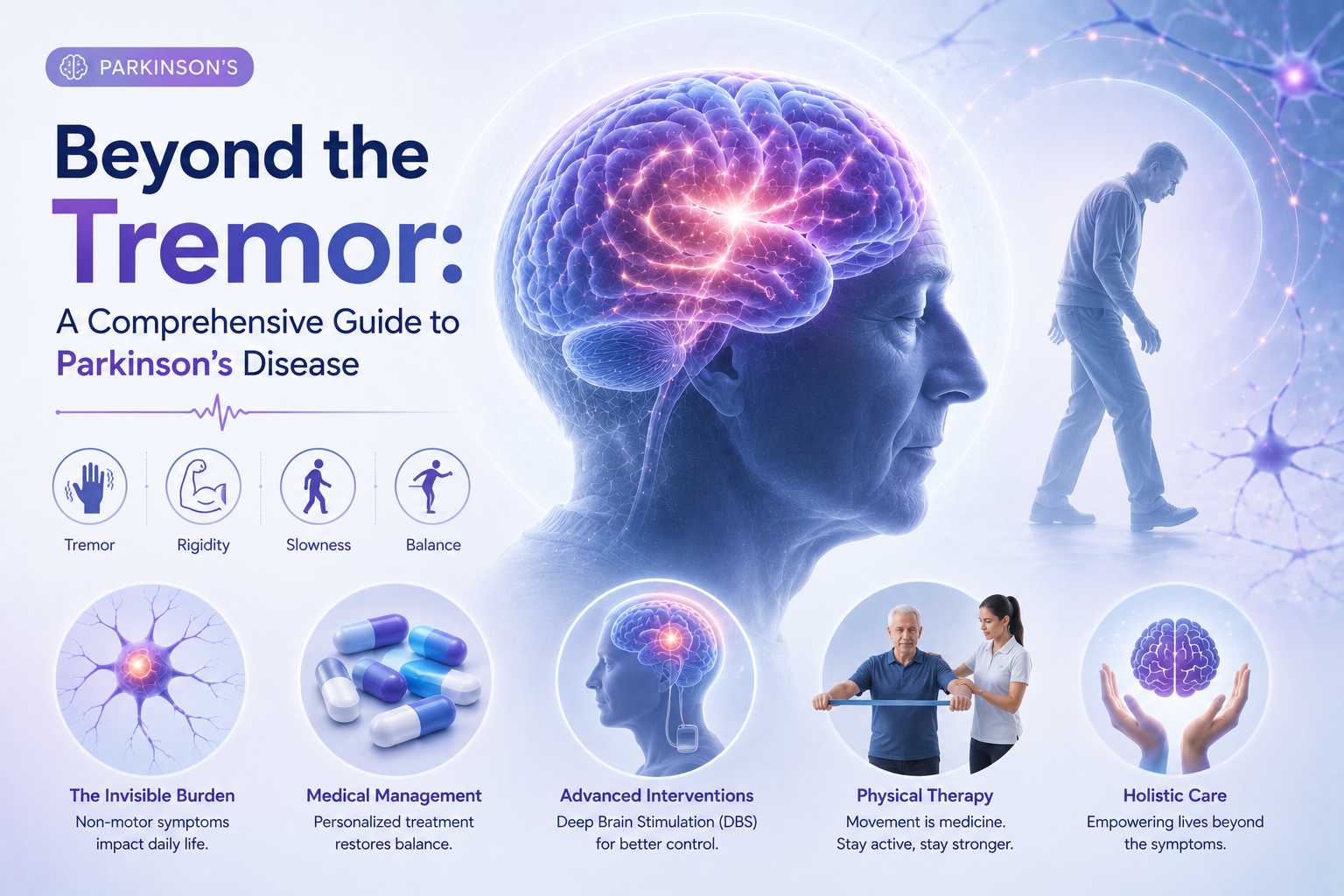
Redefining Parkinson's Disease
When most people think of Parkinson's Disease (PD), they picture a resting tremor. While tremor is the most recognizable hallmark, Parkinson's is a complex, multi-system neurodegenerative disorder caused by the progressive loss of dopamine-producing neurons in the substantia nigra. Understanding the full spectrum of the disease is crucial for holistic patient management.
The Cardinal Motor Symptoms (TRAP)
Neurologists typically diagnose Parkinson's based on the presence of specific motor symptoms, easily remembered by the acronym TRAP:
- Tremor: Typically a "pill-rolling" resting tremor that improves with voluntary movement.
- Rigidity: Muscle stiffness, often presenting as "cogwheel" rigidity during clinical examination.
- Akinesia/Bradykinesia: Slowness of movement. Patients may notice a reduced arm swing while walking or a progressive reduction in the size of their handwriting (micrographia).
- Postural Instability: Balance problems that occur later in the disease course, increasing the risk of falls.
The Invisible Burden: Non-Motor Symptoms
Perhaps the most clinically challenging aspects of PD are the non-motor symptoms, which often precede motor symptoms by years or even decades. These include:
- Anosmia: A reduced sense of smell.
- RBD (REM Sleep Behavior Disorder): Acting out vivid dreams during sleep.
- Autonomic Dysfunction: Orthostatic hypotension (blood pressure dropping upon standing), severe constipation, and urinary issues.
- Neuropsychiatric Symptoms: Depression, anxiety, and in later stages, cognitive decline or hallucinations.
Medical Management: The Dopamine Paradigm
The gold standard for treating the motor symptoms of PD remains Levodopa, a chemical precursor to dopamine that crosses the blood-brain barrier. Levodopa is almost always combined with Carbidopa to prevent peripheral breakdown, reducing nausea and increasing efficacy.
As the disease progresses, patients often experience "motor fluctuations" (wearing off of medication) and dyskinesias (involuntary writhing movements). To manage this, we utilize dopamine agonists (like Pramipexole), MAO-B inhibitors (like Rasagiline), and COMT inhibitors.
Advanced Interventions: Deep Brain Stimulation (DBS)
For patients who experience severe motor fluctuations despite optimized medical therapy, Deep Brain Stimulation (DBS) is a surgical game-changer. DBS acts like a pacemaker for the brain. Electrodes are precisely implanted into specific target areas (usually the Subthalamic Nucleus or Globus Pallidus internus). By delivering continuous electrical impulses, DBS overrides the abnormal brain circuitry, drastically reducing tremors, rigidity, and the need for high-dose medications.
The Importance of Physical Therapy
Pharmacology is only half the battle. Targeted physical therapy, particularly LSVT BIG therapy, teaches patients to use larger movements to counteract bradykinesia. Exercise promotes neuroplasticity and is the only intervention consistently shown to potentially slow the clinical progression of the disease.
Expert Second Opinion
Facing a complex neurological diagnosis? Consult Dr. Ranjan Kumar for a thorough clinical review.
Book Now