Memory Loss: When Is It Alzheimer's and When Is It Normal Aging?
The Fear of Forgetting
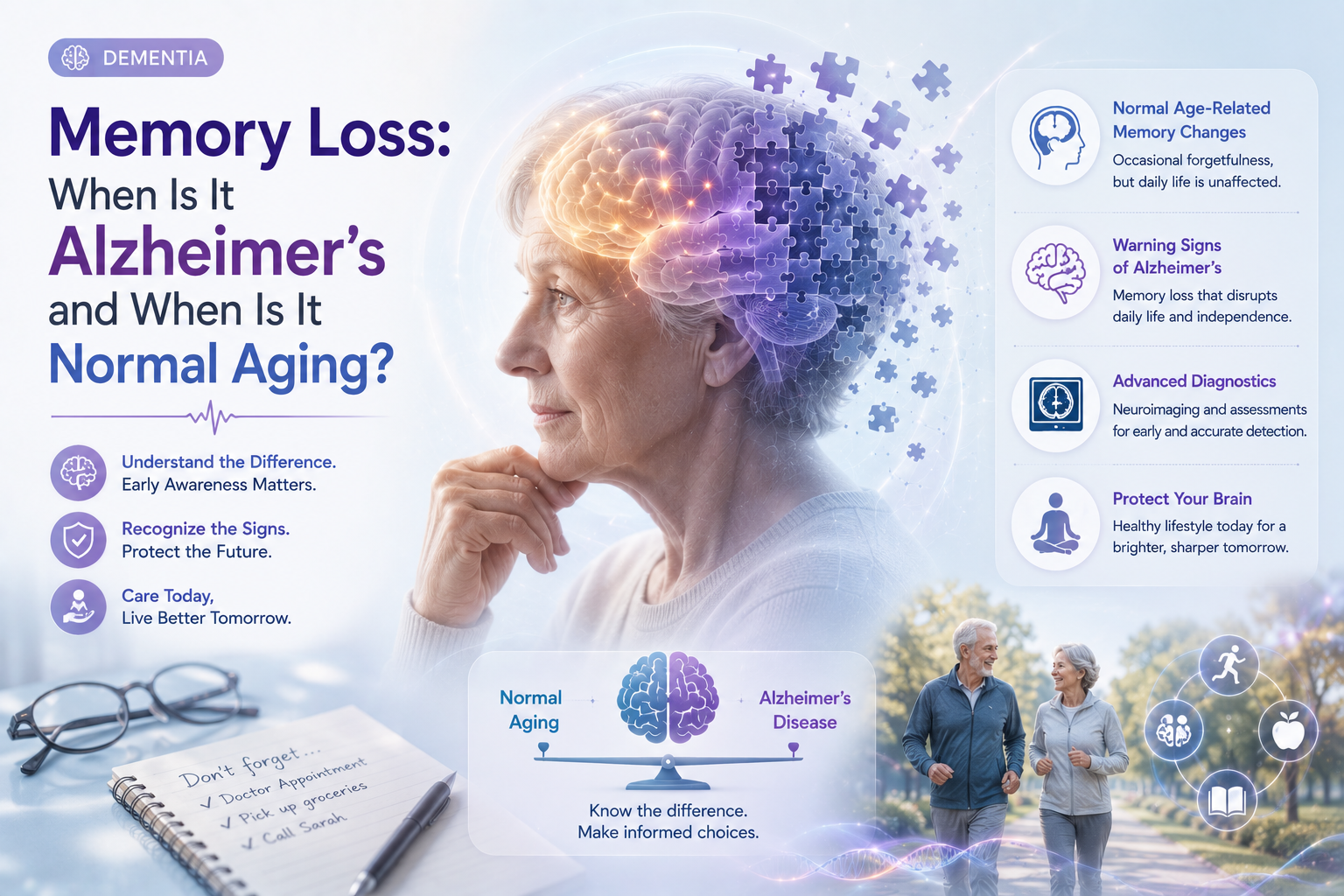
As a neurologist, one of the most common concerns I hear from patients over the age of 60 is the fear of Alzheimer's disease. Misplacing keys, forgetting a neighbor's name, or walking into a room and forgetting why—these are universally frustrating experiences. However, the brain, much like the rest of the body, undergoes physical changes as we age. It is entirely normal to experience some degree of cognitive slowing. The critical distinction lies in how this memory loss impacts daily functioning.
Normal Age-Related Memory Changes
Normal aging is characterized by a gradual slowing of processing speed and a slight reduction in the ability to multitask. Key features of benign forgetfulness include:
- Transience: Forgetting a word or name but remembering it later.
- Contextual Memory: Occasionally forgetting an appointment but remembering the overall context of the week.
- Independence: You can still manage your finances, navigate familiar routes, and operate appliances without assistance.
Warning Signs of Alzheimer's Disease and Dementia
Dementia is not a specific disease but a blanket term for a decline in cognitive ability severe enough to interfere with daily life. Alzheimer's disease is the most common cause of dementia. Watch for these clinical red flags:
1. Disruptive Memory Loss
Unlike normal aging, patients with early Alzheimer's often forget recently learned information. Asking the same question repeatedly and increasingly relying on memory aids (like endless notes or family members) for things they used to handle independently are major warning signs.
2. Challenges in Planning or Solving Problems
A noticeable deficit in executive function. This often manifests as an inability to follow a familiar recipe or keep track of monthly bills that were previously managed with ease.
3. Difficulty Completing Familiar Tasks
Getting lost driving to a familiar location, such as a grocery store visited for decades, or forgetting the rules of a favorite game.
4. Confusion with Time or Place
Losing track of dates, seasons, and the passage of time. In advanced stages, patients may forget where they are or how they got there.
The Role of Neuroimaging and Diagnostics
If you or a loved one are experiencing these red flags, an early clinical evaluation is paramount. We utilize a combination of cognitive assessments (such as the MMSE or MoCA), blood tests to rule out reversible causes like Vitamin B12 deficiency or hypothyroidism, and neuroimaging. MRI and CT scans help us visualize brain atrophy, particularly in the hippocampus, which is the brain's memory center.
Proactive Brain Health
While there is currently no cure for Alzheimer's, lifestyle interventions can significantly delay the onset of cognitive decline. Regular cardiovascular exercise increases blood flow to the brain, while intellectual stimulation (learning a new language or instrument) builds cognitive reserve. Furthermore, managing vascular risk factors like hypertension, diabetes, and hyperlipidemia is critical to preventing vascular dementia.
Expert Second Opinion
Facing a complex neurological diagnosis? Consult Dr. Ranjan Kumar for a thorough clinical review.
Book Now