Headaches, Seizures, and Vision Changes: When to Suspect a Brain Tumor
The Anxiety of the Unknown
Whenever a patient walks into my clinic complaining of persistent headaches, I know the unspoken fear lingering in the back of their mind: "Do I have a brain tumor?" As a neurologist, my goal is to alleviate that anxiety through precise clinical evaluation. The truth is, primary brain tumors are relatively rare, and the vast majority of headaches are benign. However, understanding the true neurological warning signs of a brain tumor is essential for early detection and life-saving intervention.
Why Brain Tumors Cause Symptoms
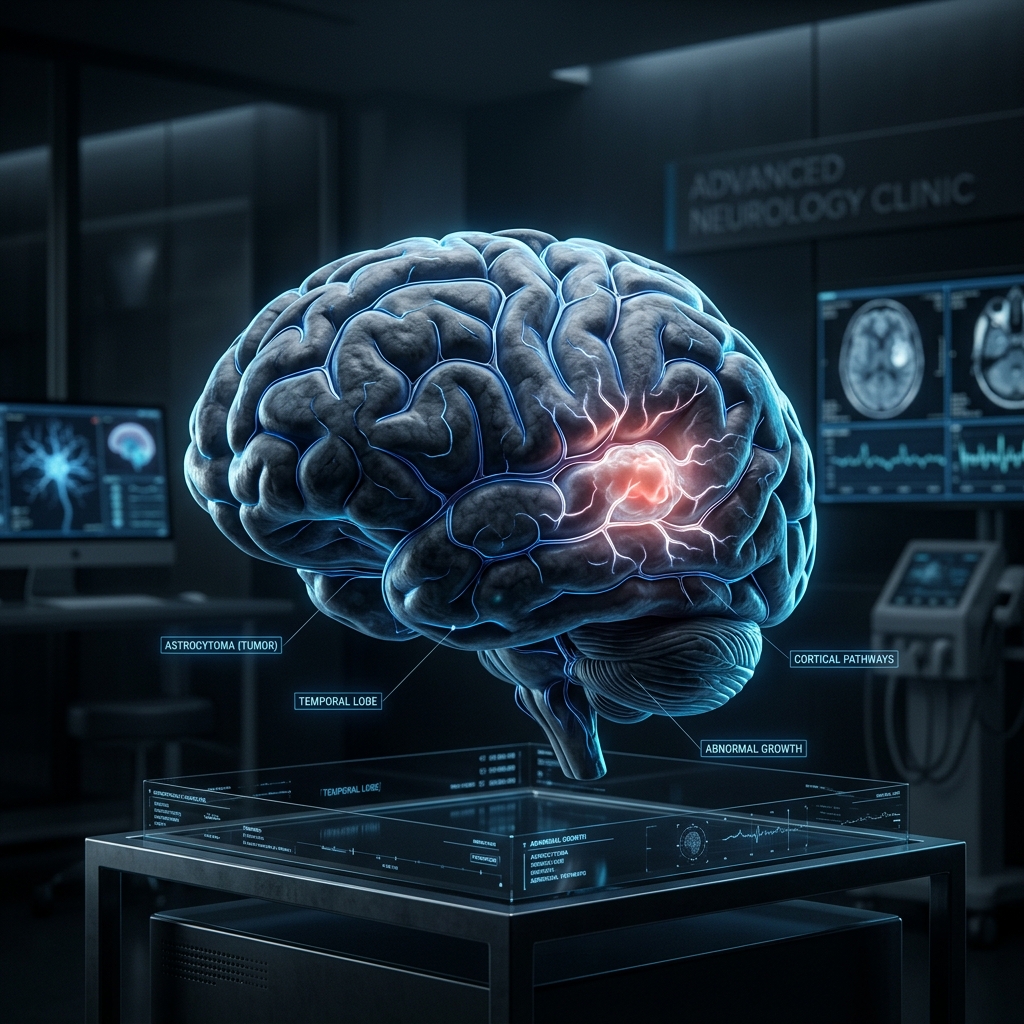
The human skull is a rigid, closed vault of bone designed to protect your brain. Because there is no room for expansion, any abnormal growth—whether benign (non-cancerous) or malignant (cancerous)—creates increased intracranial pressure (ICP). Furthermore, the tumor can directly compress or invade specific brain regions, disrupting the functions controlled by those areas. This dual effect produces the classic symptoms.
The Red Flags: Symptoms You Must Not Ignore
1. The "Different" Headache
Brain tumor headaches are rarely just "bad" headaches. They have a distinct character. You should seek immediate neurological evaluation if you experience a headache that:
- Is entirely new or radically different from any headache you've ever had.
- Is worst in the morning upon waking up, and sometimes causes you to wake up from sleep.
- Worsens significantly with coughing, sneezing, bending over, or bearing down (actions that increase pressure in the head).
- Is accompanied by unexplained nausea and forceful vomiting, especially in the early morning.
2. New Onset Seizures in Adulthood
A seizure is a sudden burst of abnormal electrical activity in the brain. While seizures in childhood are often related to epilepsy, a first-time seizure in a previously healthy adult is a massive red flag. Tumors irritate the surrounding brain tissue, sparking this electrical storm. The seizure may be a full-body convulsion (generalized) or localized twitching in one arm or side of the face (focal).
3. Progressive Neurological Deficits
As a tumor grows, it slowly damages specific functional areas. This manifests as a gradual, progressive loss of function over weeks or months, such as:
- Motor Weakness: Slowly worsening weakness or clumsiness in one arm, one leg, or one side of the body.
- Speech Difficulties (Aphasia): Struggling to find the right words, speaking gibberish, or suddenly being unable to understand spoken language.
- Sensory Changes: Progressive numbness or loss of sensation on one side.
4. Vision and Hearing Changes
Tumors near the optic nerves or pituitary gland can cause a gradual loss of peripheral vision (often described as "tunnel vision") or double vision (diplopia). Similarly, a specific benign tumor called an Acoustic Neuroma grows on the nerve responsible for hearing and balance, leading to unilateral (one-sided) hearing loss and ringing in the ear (tinnitus).
5. Cognitive and Personality Changes
Tumors in the frontal lobe—the area responsible for executive function, judgment, and personality—can cause profound changes. Family members might notice the patient becoming unusually apathetic, irritable, losing their inhibitions, or struggling with simple decision-making and memory.
The Diagnostic Journey
If clinical suspicion is high, the gold standard for diagnosis is a Magnetic Resonance Imaging (MRI) scan of the brain with contrast. An MRI provides exquisitely detailed images of the brain's anatomy, allowing us to see the exact size, location, and characteristics of any mass. Depending on the findings, a biopsy and a collaborative approach involving neurosurgery and neuro-oncology will dictate the treatment plan.
A Message of Reassurance
While this list of symptoms sounds frightening, remember that context is everything in neurology. A headache is just a headache 99% of the time. But if you or a loved one experience a combination of these red flags, especially new-onset seizures or progressive weakness, do not wait. Prompt evaluation by a neurologist ensures that if a tumor is present, we can fight it with the most advanced medical and surgical tools available.
Expert Second Opinion
Facing a complex neurological diagnosis? Consult Dr. Ranjan Kumar for a thorough clinical review.
Book Now