Peripheral Neuropathy Explained: Causes, Symptoms, and Nerve Healing
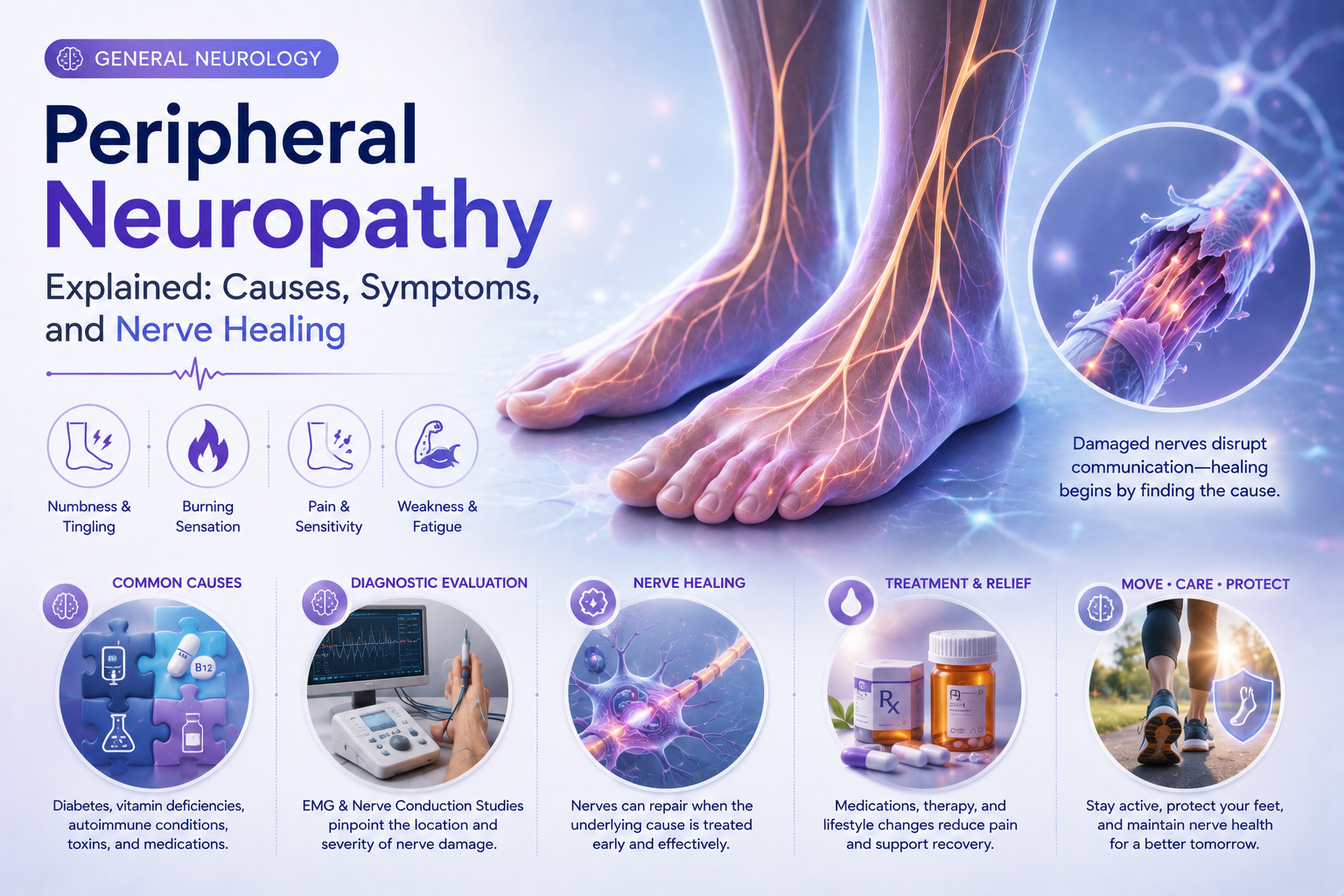
The Fraying of the Wiring
The peripheral nervous system is the vast communication network that transmits information from the central nervous system (brain and spinal cord) to every other part of the body. When these delicate nerves are damaged—a condition known as peripheral neuropathy—the communication breaks down. I often describe it to my patients as static on a telephone line or a frayed electrical wire.
Clinical Manifestations
Because peripheral nerves have distinct functions, the symptoms of neuropathy depend entirely on which types of nerves are damaged:
- Sensory Nerves: Damage causes numbness, tingling (like "pins and needles"), a burning sensation, or extreme sensitivity to touch (allodynia). This usually begins in the longest nerves first, manifesting in the toes and feet before progressing upward in a "stocking-glove" distribution.
- Motor Nerves: Damage leads to muscle weakness, cramping, fasciculations (twitching), and eventually muscle atrophy.
- Autonomic Nerves: Damage disrupts involuntary functions, leading to issues like orthostatic hypotension, digestive difficulties, and abnormal sweating.
Primary Etiologies (Causes)
Identifying the root cause is the most critical step in managing peripheral neuropathy. The most common clinical culprits include:
- Diabetic Neuropathy: Chronic high blood sugar damages the walls of the tiny blood vessels (capillaries) that supply oxygen and nutrients to the nerves. This is the leading cause of neuropathy worldwide.
- Vitamin Deficiencies: B vitamins, particularly B12, are essential for nerve health and myelin sheath maintenance.
- Autoimmune Disorders: Conditions like Lupus, Rheumatoid Arthritis, and Guillain-Barré syndrome where the immune system attacks peripheral nerves.
- Toxins and Medications: Heavy metal exposure, chronic alcoholism, and certain chemotherapy drugs are known neurotoxins.
Diagnostic Evaluation
To accurately diagnose neuropathy, we utilize Electromyography (EMG) and Nerve Conduction Studies (NCS). These tests measure the electrical activity in the muscles and the speed at which nerves transmit signals, allowing us to pinpoint the exact location and severity of the nerve damage.
Treatment and Nerve Healing
While destroyed nerves cannot always be fully regenerated, peripheral nerves do have a limited capacity for repair if the underlying cause is addressed promptly. Strict glycemic control is paramount for diabetic patients. Symptomatic relief for neuropathic pain is typically achieved using medications that stabilize nerve membranes, such as Gabapentin, Pregabalin, or certain SNRIs like Duloxetine. Additionally, physical therapy and proper foot care are vital to prevent ulcerations and maintain mobility.
Expert Second Opinion
Facing a complex neurological diagnosis? Consult Dr. Ranjan Kumar for a thorough clinical review.
Book Now