The Neurology of Sleep: How Insomnia and Sleep Apnea Damage the Brain
Sleep: The Brain's Maintenance Cycle
Historically, sleep was viewed as a passive state of rest. Modern neurology reveals that sleep is an incredibly active, highly orchestrated biological imperative. Depriving the brain of sleep is akin to running a complex engine without ever allowing it to cool down or clear out its exhaust.
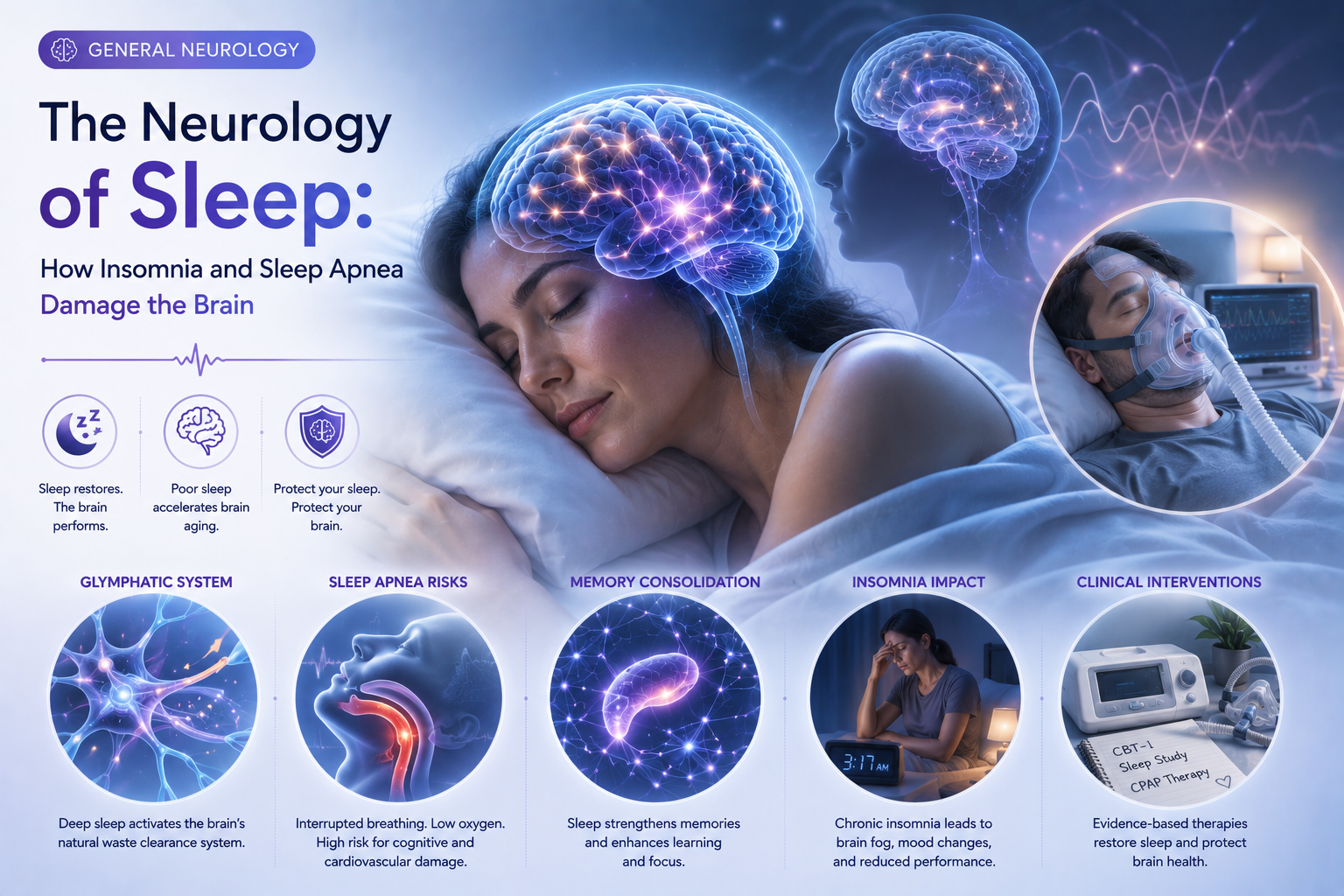
The Glymphatic System and Brain Clearance
One of the most groundbreaking neurological discoveries of the past decade is the glymphatic system. This is the brain's unique waste clearance system. During deep, slow-wave sleep, the brain's glial cells literally shrink, opening up spaces between neurons. Cerebrospinal fluid rushes through these spaces, washing away toxic metabolic byproducts accumulated during waking hours. Chief among these toxins is amyloid-beta—the very protein that forms the destructive plaques in Alzheimer's disease. Chronic sleep deprivation directly impairs this nightly neuro-wash, accelerating cognitive decline.
The Threat of Obstructive Sleep Apnea (OSA)
Obstructive Sleep Apnea is a neurological and respiratory condition where the airway repeatedly collapses during sleep. The brain, sensing dropping oxygen levels (hypoxia), triggers a micro-arousal to force a breath. This can happen dozens of times per hour.
From a neurological perspective, untreated OSA is devastating. The repeated cycles of hypoxia and rapid reoxygenation create massive oxidative stress and systemic inflammation. Clinically, this manifests as:
- Severe Daytime Somnolence: Uncontrollable sleepiness during the day.
- Cognitive Impairment: Deficits in executive function, poor concentration, and memory fragmentation.
- Cerebrovascular Risk: OSA is an independent, major risk factor for hypertension and stroke.
Memory Consolidation
Beyond cleaning, sleep is when memory consolidation occurs. During REM (Rapid Eye Movement) and deep NREM sleep, the brain actively replays the day's experiences, transferring information from short-term holding in the hippocampus to long-term storage in the neocortex. Without adequate sleep, you essentially lose the ability to commit new information to memory.
Clinical Interventions
Addressing sleep architecture is a primary goal in my clinic. For insomnia, Cognitive Behavioral Therapy for Insomnia (CBT-I) has proven more effective long-term than hypnotic medications. For Sleep Apnea, diagnostic polysomnography (a sleep study) followed by CPAP therapy is vital. By restoring oxygenation and allowing the brain to achieve deep sleep architectures, patients often see a rapid reversal of brain fog and cognitive fatigue.
Expert Second Opinion
Facing a complex neurological diagnosis? Consult Dr. Ranjan Kumar for a thorough clinical review.
Book Now