Epilepsy Myths Debunked: What Every Patient Should Know
The Misunderstood Condition
Epilepsy is one of the world's oldest recognized conditions, yet myths and misconceptions still surround it. These myths often lead to social stigma and, more dangerously, incorrect first aid.
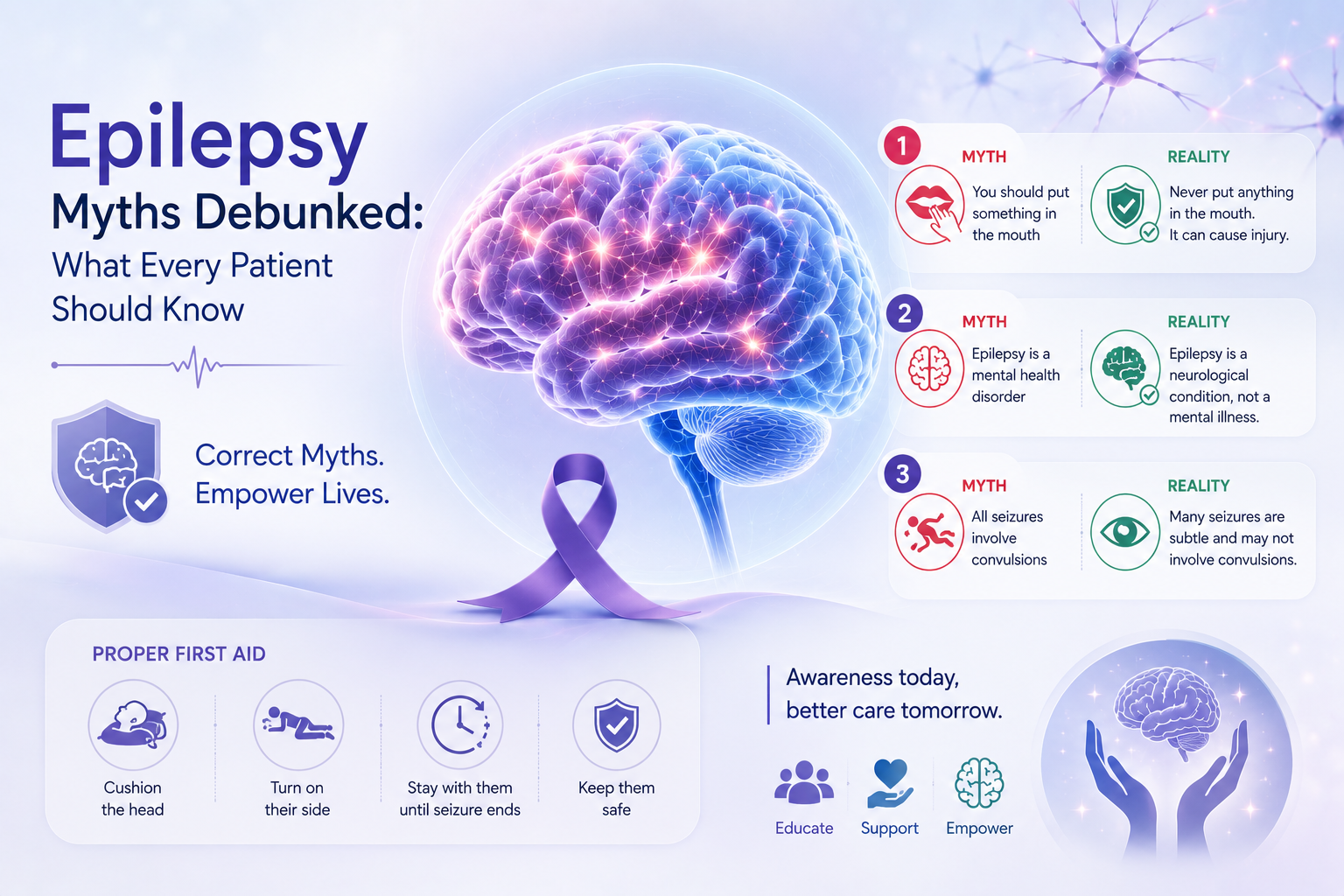
Myth 1: You should put something in the mouth
Reality: This is perhaps the most dangerous myth. You should never put anything in the mouth of someone having a seizure. It can cause choking, broken teeth, or injury to the jaw. It is physically impossible to swallow your tongue during a seizure.
Myth 2: Epilepsy is a mental health disorder
Reality: Epilepsy is a neurological condition—a physical issue caused by abnormal electrical activity in the brain. It is not a mental illness, nor is it contagious.
Myth 3: All seizures involve convulsions
Reality: While "grand mal" (tonic-clonic) seizures are the most visible, many seizures are subtle. Absence seizures may look like someone is daydreaming, while focal seizures might involve repetitive movements or strange sensations without loss of consciousness.
Proper First Aid
If you witness a seizure, the goal is safety: Cushion the head, turn the person on their side to keep the airway clear, and stay with them until the seizure ends naturally.
Expert Second Opinion
Facing a complex neurological diagnosis? Consult Dr. Ranjan Kumar for a thorough clinical review.
Book Now