Understanding Stroke: The BE-FAST Method Explained
The Criticality of Time
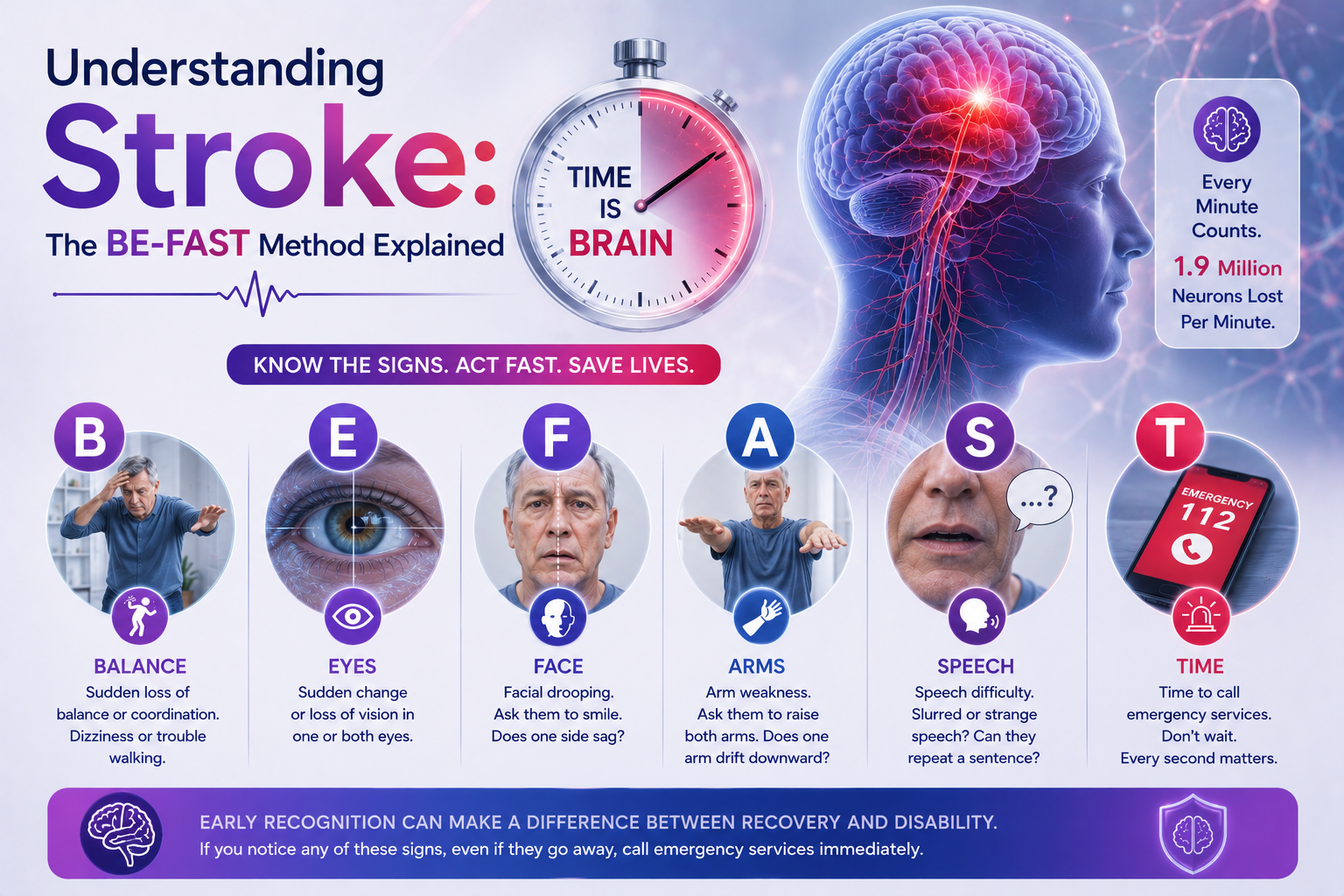
Stroke remains a leading cause of disability worldwide. However, the outcomes are dramatically different when medical intervention occurs within the "Golden Hour." In neurology, we often say "Time is Brain." For every minute a stroke remains untreated, the average patient loses 1.9 million neurons.
What is BE-FAST?
The BE-FAST acronym is a specialized clinical tool used to identify the onset of a stroke. While many are familiar with FAST, the expanded BE-FAST includes critical early warning signs related to balance and vision.
B - Balance
Sudden loss of balance or coordination. The patient may feel dizzy or find it difficult to stand or walk straight.
E - Eyes
Sudden change in vision or loss of vision in one or both eyes. This can include double vision or blurred sight.
F - Face
Facial drooping. Ask the person to smile. Does one side of the face sag?
A - Arms
Arm weakness. Ask the person to raise both arms. Does one arm drift downward?
S - Speech
Speech difficulty. Is their speech slurred or strange? Can they repeat a simple sentence correctly?
T - Time
Time to call emergency services. If the person shows any of these symptoms, even if the symptoms go away, call for help immediately.
Conclusion
Recognizing these signs isn't just for medical professionals—it's for everyone. Your awareness could be the difference between a full recovery and permanent neurological damage.
Expert Second Opinion
Facing a complex neurological diagnosis? Consult Dr. Ranjan Kumar for a thorough clinical review.
Book Now