When Headaches Become Dangerous: Warning Signs to Watch
The Spectrum of Pain
Almost everyone experiences a headache at some point. However, as a neurologist, my job is to distinguish between primary headaches (like migraines) and secondary headaches that indicate a serious underlying condition.
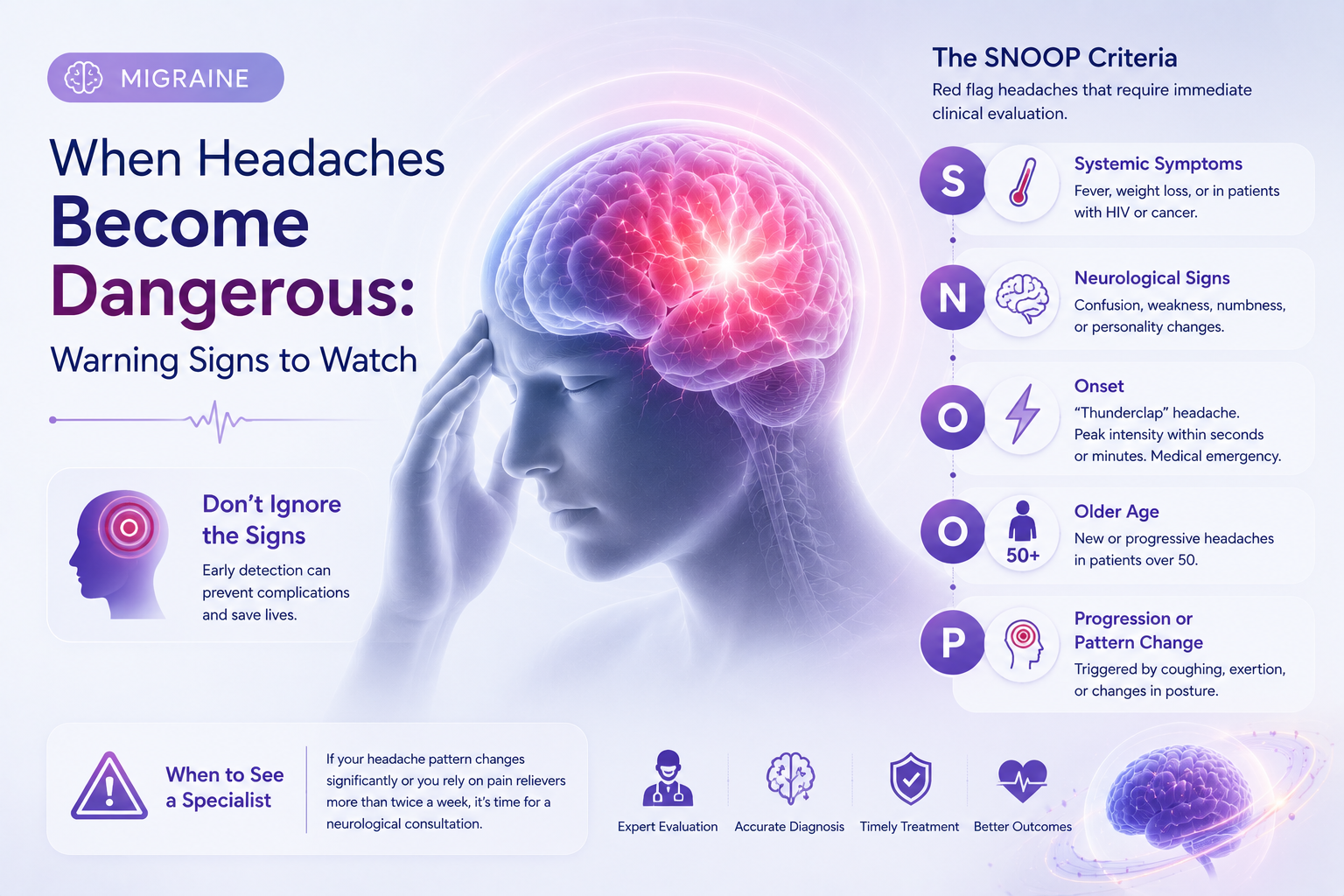
The SNOOP Criteria
We use the SNOOP acronym to identify "Red Flag" headaches that require immediate neuro-imaging and clinical evaluation.
S - Systemic Symptoms
If a headache is accompanied by fever, weight loss, or in patients with HIV or cancer, it requires investigation.
N - Neurological Signs
Confusion, weakness, numbness, or changes in personality that accompany the pain.
O - Onset
The "Thunderclap" headache. A headache that reaches its peak intensity within seconds or minutes. This is a medical emergency.
O - Older Age
New or progressive headaches in patients over the age of 50.
P - Progression or Pattern Change
If the headache is triggered by coughing, exertion, or changes in posture (lying down vs. standing up).
When to See a Specialist
If your headache pattern changes significantly or if you are using over-the-counter pain relievers more than twice a week, it is time for a professional neurological consultation.
Expert Second Opinion
Facing a complex neurological diagnosis? Consult Dr. Ranjan Kumar for a thorough clinical review.
Book Now