Life After Stroke: Neuroplasticity and the Road to Recovery
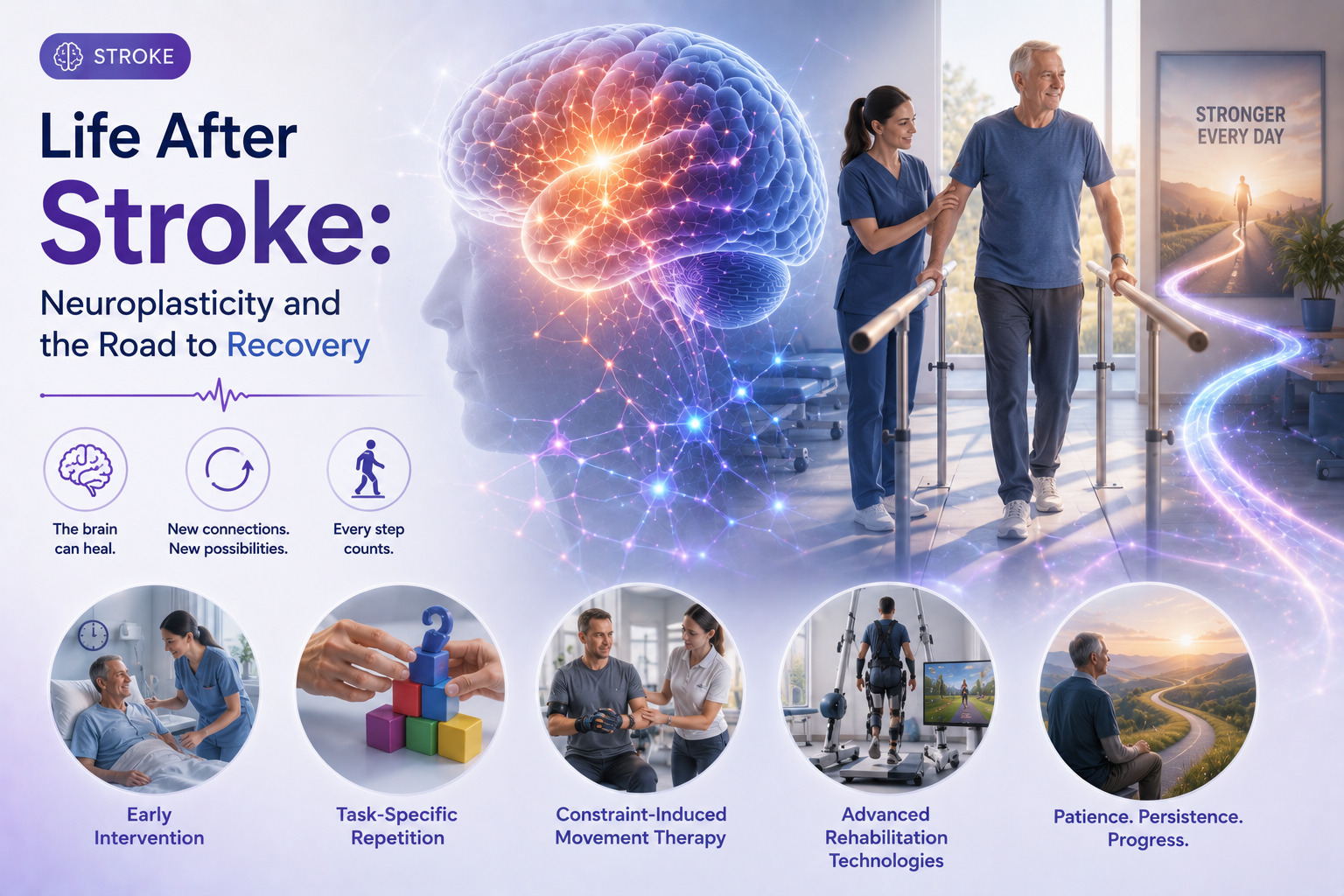
The Aftermath of a Stroke
Surviving a stroke is a critical medical victory, but the journey to recovery begins the moment the patient is stabilized. Whether the stroke was ischemic (a blocked vessel) or hemorrhagic (a ruptured vessel), the resulting lack of oxygen causes a localized area of brain tissue death, known as an infarct. The physiological deficits that follow—be it hemiparesis (one-sided weakness), aphasia (speech difficulty), or dysphagia (swallowing difficulty)—depend entirely on the location of the infarct.
The Miracle of Neuroplasticity
For decades, medical dogma held that the adult brain was a static organ; if neurons died, the functions they controlled were lost forever. We now know this is categorically false thanks to neuroplasticity. Neuroplasticity is the brain's extraordinary ability to reorganize itself by forming new neural connections throughout life.
Following a stroke, the healthy brain tissue surrounding the damaged area (the penumbra) can literally rewire itself to take over the functions of the dead neurons. However, this rewiring does not happen passively; it requires intense, repetitive, and task-specific stimulation.
Principles of Stroke Rehabilitation
Effective neuro-rehabilitation is built on several core clinical principles:
1. Early Intervention
The brain is most plastic and receptive to rewiring in the first three to six months following a stroke. Rehabilitation must begin as soon as the patient is medically stable, often within 24 to 48 hours.
2. Task-Specific Repetition
Just as a musician practices scales to build muscle memory, a stroke survivor must perform thousands of repetitions of specific movements to forge new neural pathways. This is known as "massed practice."
3. Constraint-Induced Movement Therapy (CIMT)
A highly effective technique where the unaffected limb is restrained, forcing the patient to use the weakened, stroke-affected limb for daily tasks. This combats "learned non-use" and aggressively stimulates neuroplastic changes in the motor cortex.
Advanced Rehabilitation Technologies
Modern neurology utilizes cutting-edge technology to assist neuroplasticity. Robotic exoskeletons allow patients with severe lower limb weakness to practice the highly repetitive motions of walking. Virtual Reality (VR) and gamification are being used to make high-repetition therapy engaging, effectively hacking the brain's reward system to encourage sustained effort.
Conclusion
Recovery from a stroke is a marathon, not a sprint. It requires immense patience, a dedicated multidisciplinary team (physical, occupational, and speech therapists), and a profound understanding that through targeted effort, the brain can indeed heal itself.
Expert Second Opinion
Facing a complex neurological diagnosis? Consult Dr. Ranjan Kumar for a thorough clinical review.
Book Now